
Last Updated: November 15, 2026
Quick Summary
To choose a gentle retinol serum as a beginner, start with a low strength, look for supporting ingredients like ceramides and hyaluronic acid, and choose a fragrance-free formula. Begin with one night per week and increase slowly only if your skin stays calm. Pricing varies, so check the product page for current costs.
- Start at the lowest strength you can find and increase only over time.
- Check the stated retinol percentage; if none is listed, contact the brand first.
- Look for ceramides, hyaluronic acid, glycerin or niacinamide to support the skin barrier.
- Choose fragrance-free formulas and avoid retinol combined with strong exfoliating acids at first.
- Begin with one night per week, then move to two, then three, if skin is not stinging or peeling.
Table of Contents
- Why Beginners Need a Gentle Retinol Serum
- What Strength Retinol Serum Is Best for Beginners
- Reading Concentration Labels
- Best Retinol for Sensitive Skin Beginners: Ingredients to Look For
- How Often to Use Retinol as a Beginner
- How to Layer Retinol With Moisturizer
- Troubleshooting Irritation and Adjusting Your Plan
- Shopping Roots & Co.'s Gentle Options
- Frequently Asked Questions
Choosing a gentle retinol serum is the fastest way for a beginner to get the benefits of retinol without the peeling and stinging that send many first-timers back to their old routine. A gentle retinol serum starts at a low strength, uses supporting ingredients that protect the skin barrier, and gives your skin time to adjust. This guide walks you through the key steps to pick the right gentle retinol serum for your skin.
Most dermatology guidance points beginners toward low concentrations. Starting low gives your skin a chance to build tolerance before you move up, which is the core idea behind a gentle serum.
Why Beginners Need a Gentle Retinol Serum
Retinol speeds up skin cell turnover, which is why it helps with fine lines, uneven texture and dullness. That same activity is also why it can irritate skin that has never used it before. A gentle formula reduces the chance that you will react badly and quit.
Expect an adjustment period. Expect an adjustment period when starting a new retinol regimen, which can bring dryness, flaking and sensitivity. A gentle serum makes that period easier to manage, and it makes it more likely that you will stick with the routine long enough to see results.
What Strength Retinol Serum Is Best for Beginners
For most first-time users, a low-strength serum is the right place to start. If your skin is already reactive, start at the lowest strength you can find.
Think of strength as something you increase over time, not a single choice you make once. Starting with a stronger product does not speed up results in a meaningful way, and it raises the odds of irritation.
Reading Concentration Labels
Product labels do not always make strength obvious, and the number on the front of the box is only one part of the story. A practical label checklist helps you evaluate a serum beyond a list of recommended picks.
Start with the retinoid form. Over-the-counter products may list retinol, retinal (retinaldehyde), or retinyl palmitate. Retinol and retinal are the most common beginner options; retinal is generally considered more potent per application, so a lower percentage of retinal can behave like a higher percentage of retinol. Encapsulated retinol is designed to release slowly, which can make a given percentage feel gentler than a non-encapsulated formula at the same number.
Next, find the percentage. Look for the percentage of retinol listed on the box or the product page. If you see only "retinol" with no number, contact the brand before you buy. Also check where retinol sits in the ingredient list, since ingredients are listed by concentration. A serum that lists retinol near the top is likely to deliver more than one that lists it near the bottom.
Then check the packaging. Retinol can degrade with exposure to light and air, so opaque or airless packaging is a useful signal of how well a formula may be protected. Packaging is not a guarantee of stability, but it is a useful signal of how seriously the brand treats the ingredient.
Finally, scan the supporting ingredients. Ceramides, hyaluronic acid, glycerin, and niacinamide are common in gentle formulas because they support the skin barrier. Fragrance-free formulas reduce the chance of stinging on reactive skin. Avoid serums that combine retinol with strong exfoliating acids in the same product when you are just starting out, since that combination increases irritation.
Be cautious with claims like "maximum strength" or "clinical strength" on a beginner product. Those words describe marketing intent, not a safe starting point. Percentages and delivery systems are not always directly comparable across products, so treat the number as general guidance rather than a precise measure of how a serum will feel on your skin.
Watch out: starting with a higher-strength serum can lead to peeling and irritation. Start lower and increase only after your skin has settled.
Here is a quick checklist of what to look for on a retinol serum label.
| Label check | What to look for | Why it matters |
|---|---|---|
| Retinoid form | Retinol, retinal, or retinyl palmitate | Retinal is more potent per application |
| Percentage | A stated retinol percentage | No number means contact the brand first |
| Ingredient order | Retinol near the top of the list | Ingredients are listed by concentration |
| Packaging | Opaque or airless containers | Light and air can degrade retinol |
| Supporting ingredients | Ceramides, hyaluronic acid, glycerin, niacinamide | These support the skin barrier |
| Fragrance | Fragrance-free formula | Reduces stinging on reactive skin |
| Marketing terms | Be wary of "maximum" or "clinical strength" | These describe marketing intent, not a safe start |
Best Retinol for Sensitive Skin Beginners: Ingredients to Look For
Strength is only part of the decision. The other ingredients in a serum determine how gentle it feels on your skin. Encapsulated retinol formulas are often recommended for sensitive skin because the encapsulation is designed to release retinol more slowly.
Look for supporting ingredients that protect and hydrate the skin barrier. Ceramides and hyaluronic acid are common choices in gentle formulas. Fragrance-free formulas also reduce the chance of stinging on reactive skin. Avoid serums that combine retinol with strong exfoliating acids in the same product when you are just starting out, since that combination increases irritation.
How Often to Use Retinol as a Beginner
A widely used schedule is one night per week for the first week, then two nights for two weeks, then three nights per week. Move to the next step only if your skin is not stinging, burning or peeling.
Apply retinol at night, to clean and dry skin, in a pea-sized amount for the whole face. Use a moisturizer afterward. Keep sunscreen in your morning routine, because retinol can make skin more sensitive to sun exposure.
How to Layer Retinol With Moisturizer
Many beginners get better results by using a buffering method. Apply your moisturizer first, let it settle for a minute, then add the retinol serum. This thins the amount that reaches your skin at once, which can reduce irritation during the first few weeks.
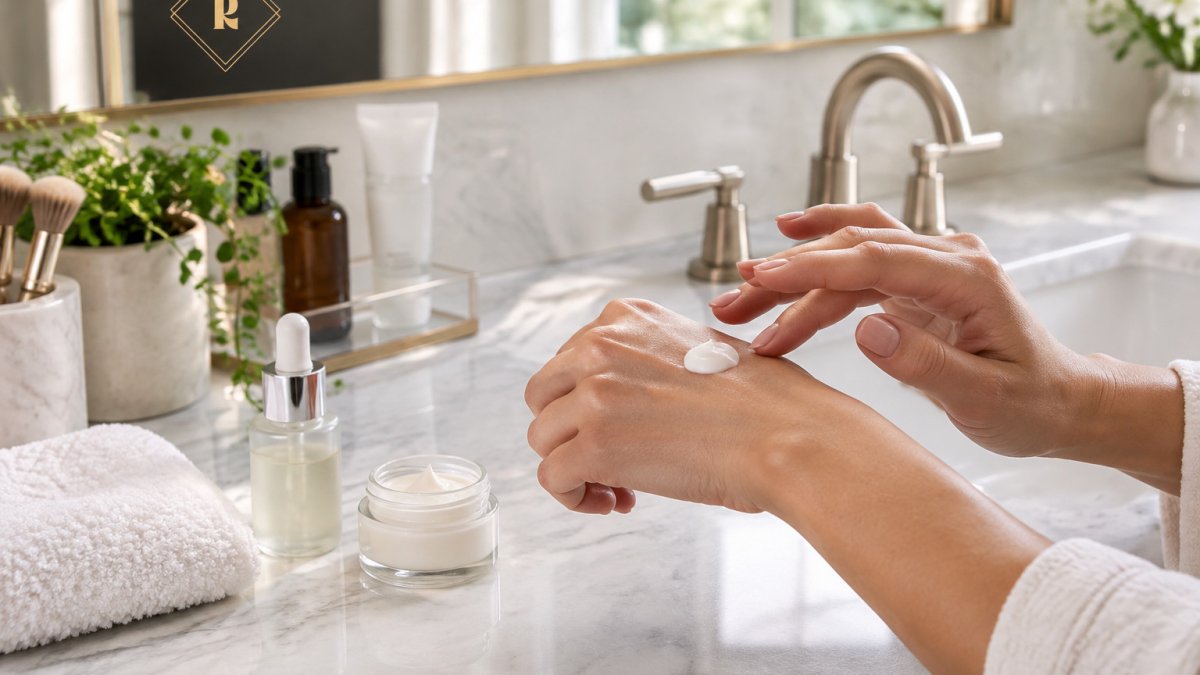
Another approach is the sandwich method: moisturizer, then retinol, then moisturizer again. Use whichever one your skin tolerates. A basic moisturizer with ceramides or hyaluronic acid works well with either method, and it should be fragrance-free if your skin is sensitive.
Close-up of hands applying moisturizer to clean skin
Troubleshooting Irritation and Adjusting Your Plan
Some dryness, flaking and mild redness are normal in the first few weeks. Stinging, burning or visible peeling are signs you should slow down. A clear adjustment plan helps you decide what to change instead of guessing.
If irritation is mild, reduce how often you apply the serum. Drop back to one night per week until your skin calms, then rebuild the schedule one night at a time. Switching to the buffering method, applying moisturizer first and then the retinol, can also reduce the amount that reaches your skin at once.
If irritation is moderate, pause for a few days until your skin calms, then restart at a lower frequency. If your skin stays irritated after you cut back frequency, the strength or formula may be wrong for you. Changing to a lower concentration is usually a better fix than pushing through discomfort.
If you miss an application, do not double up the next night. Resume your normal schedule at the next planned night. Consistency over weeks matters more than making up a single missed night.
If irritation is persistent or severe, or if you notice broken skin, swelling, or a rash that does not settle, discontinue use and consult a clinician. People who are pregnant or breastfeeding, or who have a compromised skin barrier, eczema, or rosacea, should talk to a clinician before starting retinol.
Judge a serum by how your skin behaves over several weeks, not by a single night. Give the routine realistic time. Results from retinol build gradually, and most people need to stay consistent for several months before they judge whether a product is working. Improvement usually shows up as smoother texture and more even tone before it shows up in fine lines, and irritation that fades over the first month is a better sign than irritation that worsens.
Shopping Roots & Co.'s Gentle Options
If you are ready to choose a gentle retinol serum, the Roots & Co. skincare collection includes professional-grade anti-aging options. Browse the skincare collection to compare formulas, or reach out to our team with questions about your skin type. For a closer look at gentle lip-care and beauty options, see Lip Plumping Products for a Natural Look: What Works. For current pricing, check the product page or request a quote, since pricing depends on quantity, dates, and delivery.
Choosing your first retinol should feel manageable, not stressful. Start low, add retinol slowly, and let your skin lead the way. Roots & Co. is here to help you find a gentle serum that fits your routine, so get started with the skincare collection and build your plan one step at a time.
Frequently Asked Questions
What strength retinol serum is best for beginners?
Most dermatologists suggest starting at the low end of the range, around 0.025% to 0.1%, because it gives skin time to adjust. Start at the lowest strength you can find, use it for several weeks, and only move up if your skin stays calm.
Which is the best beginner-friendly retinol serum?
The best beginner-friendly retinol serum is the one that matches your skin type, lists a low starting concentration, and includes soothing supporting ingredients such as ceramides or hyaluronic acid. Compare labels rather than brand reputation alone. Check whether the formula is fragrance-free and whether it uses encapsulated or micro-dose retinol, which is often recommended for sensitive skin.
How often should a beginner use retinol?
A common schedule starts with one night per week for the first week, then two nights for two weeks, and then three nights per week. Apply it at night on clean, dry skin. Expect an adjustment period with possible dryness, flaking, and sensitivity. If irritation persists, reduce frequency or pause until your skin recovers.
Can I use retinol with moisturizer?
Yes. Many beginners apply a moisturizer before or after retinol to buffer irritation, a method sometimes called the sandwich method. Apply a thin layer of moisturizer, let it absorb, add the retinol, then finish with another light layer if your skin feels tight. Always use sunscreen the next morning, since retinol can increase sun sensitivity.
