
Table of Contents
- What Bond Repair Treatments Actually Do
- Quick Comparison of Top Bond Repair Treatments
- 1. Amika The Kure Intense Bond Repair Mask: Maximum Strength Recovery
- 2. Olaplex Weightless Nourishing Mask: Volume Without Weight
- 3. AVEDA Bonds of Brilliance Gift Set: Plant-Powered System Approach
- 4. Living Proof Restore Instant Repair Cream: Daily Leave-In Protection
- 5. Olaplex Rich Hydration Mask: Deep Moisture for Coarse Hair
- 6. Amika Bust Your Brass Cool Blonde Strength Repair Conditioner: Repair Plus Tone
- Frequently Asked Questions
Last Updated: October 14, 2026
What Bond Repair Treatments Actually Do
Bond repair treatments target the disulfide bonds that give hair its strength and shape, the bonds that snap when hair is bleached, relaxed, or repeatedly heat-styled. When they break, the fiber loses structural integrity: it stretches too far, snaps too easily, and feels rough.

A bond repair treatment donates new bonds or helps the fiber re-form them, a different mechanism from conditioners or protein treatments.
Bond repair vs. protein treatments: not the same thing
- Protein treatments deposit hydrolyzed proteins (wheat, silk, keratin, rice) onto the surface and into cuticle gaps. They temporarily patch damage but do not rebuild internal disulfide structure, and overuse causes stiffness.
- Bond repair treatments work at the molecular level, targeting broken disulfide bonds to re-link them or supporting the fiber so it re-forms bonds during and after chemical services.
- Moisture treatments (humectants, oils, butters) restore flexibility and softness. They do not repair bonds but are essential alongside bond repair, since repaired hair can still feel dry.
A practical rule: stiff hair that snaps when wet means too much protein; mushy hair that stretches without springing back needs protein; rough, dull hair breaking at mid-length after color or heat calls for bond repair.
What the ingredients actually do
Different bond repair products use different approaches, and the label usually tells you which.
- Disulfide-bond donors and re-linkers: Marketed as "bond builders," these find broken bonds and help re-form them, the category behind the strongest repair claims.
- Cuticle-sealing and smoothing agents: These smooth the outer layer so the fiber feels less rough and resists friction. The improvement is immediate but surface-level.
- Humectants and emollients: Glycerin, butters, and oils hold moisture, making repaired hair softer and more manageable, but they do not repair bonds.
A well-formulated product often combines two or three, which is why similar claims can perform very differently.
What you can realistically expect
Bond repair is not a reset button.
- What they can do: Reduce breakage over time, improve softness and manageability, help color-treated hair feel less brittle, and make heat styling less damaging when used consistently.
- What they cannot do: Reattach split ends, reverse severe chemical damage, change natural texture, or replace trims.
- Timeline: Most users notice smoother texture and less breakage within two to three weeks. Structural improvement is gradual and cumulative.
How often to use bond repair products
Frequency depends on format and damage level.
- Weekly rinse-out masks: Start with once a week. Severely damaged hair may tolerate twice weekly briefly, then step back to once weekly.
- Daily leave-ins: Safe every wash day; designed for ongoing protection, not intensive repair.
- Conditioners with bond technology: Fine every wash, but if the formula tones or strengthens aggressively, watch for stiffness and alternate with a plain moisture conditioner.
Compatibility with protein, color, and heat
- With protein treatments: Do not stack a strong protein treatment and a bond treatment on the same wash day unless designed for it. Alternate them.
- With color services: Many bond treatments are color-safe, but ask your colorist whether to use one before, during, or after a service; some lines offer in-salon bond steps paired with at-home maintenance.
- With heat styling: Use a bond treatment plus a heat protectant. Bond repair reduces existing damage; heat protection prevents new damage. You need both.
Quick Comparison of Top Bond Repair Treatments
Most bond repair roundups stop at a table of products and prices. The table below adds the decision layer: what each treatment is for, who should avoid it, and how it fits a routine that already includes protein, color, or heat styling.
| Product | Format | Best For | Key Benefit | Watch Out For |
|---|---|---|---|---|
| Amika The Kure Intense Bond Repair Mask | Weekly rinse-out mask | Severely damaged, thick, or coarse hair | Intensive bond and moisture recovery in one treatment | Can feel heavy on fine or low-porosity hair if used more than weekly |
| Olaplex Weightless Nourishing Mask | Rinse-out mask | Fine to medium hair | Bond support without flattening volume | Not rich enough for very coarse or highly porous hair |
| AVEDA Bonds of Brilliance Gift Set | Three-piece system (shampoo, conditioner, leave-in) | Anyone wanting a full routine in one purchase | Consistent bond support across every wash | Limited-edition availability |
| Living Proof Restore Instant Repair Cream | Daily leave-in | Daily stylers and outdoor exposure | UV protection plus split-end prevention | Leave-in only; not a substitute for a weekly mask |
| Olaplex Rich Hydration Mask | Rinse-out mask | Coarse, dry, or medium-to-thick hair | Deep moisture with bond support | Too rich for fine hair |
| Amika Bust Your Brass Cool Blonde Strength Repair Conditioner | Conditioner | Blonde, silver, and gray hair | Repair plus toning in one step | Toning frequency must be adjusted to avoid over-cooling |
How to read this table by hair condition
- Fine or low-porosity hair: Prioritize lightweight formats. The Olaplex Weightless Nourishing Mask and Living Proof Restore Instant Repair Cream are the safest starting points. Skip heavy butters and oils.
- Medium, wavy, or normal-porosity hair: You have the widest range. A weekly mask plus a daily leave-in is a common, effective pattern.
- Coarse, thick, or high-porosity hair: Reach for richer formulas. The Amika The Kure Intense Bond Repair Mask and Olaplex Rich Hydration Mask are built for this.
When a bond repair treatment may not be right for you
Bond repair is not a universal fix. If hair is breaking from mechanical damage (tight styles, rough brushing, heat tools on dry hair), a bond treatment alone will not solve it. If your scalp is irritated, pause bond treatments and address the scalp first. And if hair feels stiff, straw-like, or snaps when wet after a bond product, you may be overdoing protein-like strengthening, alternate with a pure moisture mask.
Cost per use, not just sticker price
Different formats offer different value depending on your routine. A weekly mask used consistently over two months delivers different cost-per-use than a daily leave-in applied five times a week. Neither is automatically "better", the right choice depends on whether your hair needs intensive repair or ongoing protection. If unsure, start with a daily leave-in option and add an intensive mask only if you are not seeing progress.
1. Amika The Kure Intense Bond Repair Mask: Maximum Strength Recovery
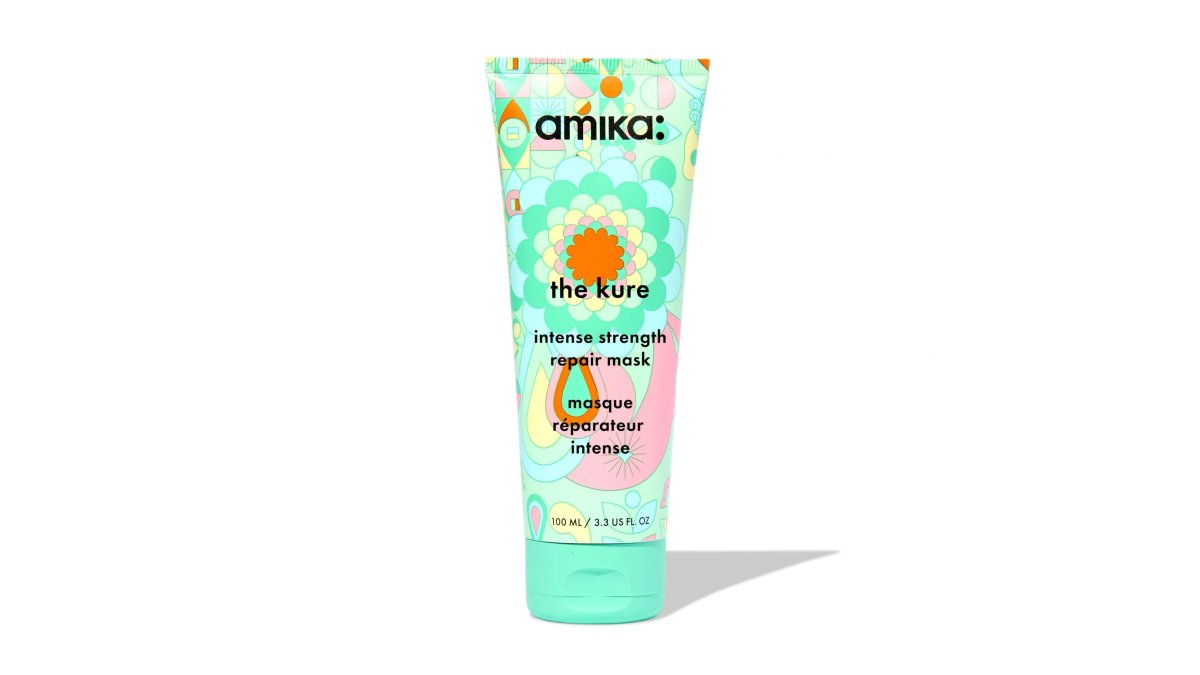
The strongest intensive treatment in our selection for severely damaged hair, the Amika The Kure Intense Bond Repair Mask uses Bond Cure Technology to target and strengthen the most vulnerable bonds in your hair structure.
Use it weekly: apply after shampooing, leave on for 10 minutes, then rinse thoroughly. Most users see visible improvement in texture and manageability within the first application. The color-safe formula suits dyed or bleached hair.
What sets it apart is the combination of borage oil, shea butter, mango butter, and sea buckthorn, which restore shine, reduce frizz, and strengthen strands. For those seeking professional-grade results, this treatment delivers clinically proven repair benefits.
Cosmetics Business reveals the top 5 hair care trends
2. Olaplex Weightless Nourishing Mask: Volume Without Weight
For fine or medium hair that fears flattening, the Olaplex Weightless Nourishing Mask uses Olaplex's patented Bond Building Technology plus Biomimetic Cuticle Technology to strengthen hair while maintaining volume and lightness.
It hydrates deeply without the heaviness of traditional masks and seals the cuticle for up to five washes, locking in moisture while preventing frizz and dryness.
Fine hair needs moisture but cannot tolerate thick, occlusive products, and this mask absorbs into the fiber rather than sitting on the surface.
3. AVEDA Bonds of Brilliance Gift Set: Plant-Powered System Approach
This limited-edition AVEDA gift set takes a complete system approach: a strengthening shampoo, conditioner, and leave-in treatment.

Formulated with plant-derived ingredients and 94% naturally derived components, the set uses AVEDA's triple-action strengthening technology to build new hair bonds across your entire routine.
Amika The Kure Intense Bond Repair Mask →
If you are serious about bond repair and prefer plant-based formulations, this set delivers comprehensive results, with a Pure-Fume aroma of organic ylang-ylang, rose, and marjoram.
4. Living Proof Restore Instant Repair Cream: Daily Leave-In Protection
Not everyone needs an intensive weekly mask. The Living Proof Restore Instant Repair Cream is a daily leave-in: apply 1-2 pumps to damp hair after every wash, then style as usual.

It uses Living Proof's patented Healthy Hair Molecule (OFPMA) and silk proteins to repair cuticles without silicones or oils.
Its UV protection prevents sun-related damage, often overlooked in bond repair routines, making it an important protective layer for daily stylers and outdoor exposure. For those seeking an online affiliate option for daily bond support and UV defense, this leave-in offers consistent care.
5. Olaplex Rich Hydration Mask: Deep Moisture for Coarse Hair
Coarse and thick hair needs heavier treatments to penetrate the thicker fiber. The Olaplex Rich Hydration Mask delivers intense hydration for dry, coarse, and medium-to-thick hair, with 16 times instant hydration and benefits lasting through five washes.
It uses the same Bond Building Technology as Olaplex's other products but with a richer formulation, including an Avocado & Shea Conditioning Complex plus multi-weight oils that coat and nourish without residue.
Coarse hair handles this richness in ways fine hair cannot, with noticeably smoother, shinier results and reduced frizz. Choose this formula based on texture and damage level rather than price alone.
Future Market Insights Hair Bond Multiplier Market report
6. Amika Bust Your Brass Cool Blonde Strength Repair Conditioner: Repair Plus Tone
Blonde, silver, and gray hair need bond repair and toning to maintain vibrancy.
It eliminates the need for a separate toning product and saves time in your routine.
The value is the dual repair-plus-toning benefit in one application.
Choosing the right bond repair treatment depends on hair type, damage level, and routine.
The key is consistency: bond repair treatments work best used regularly, and most users see visible improvement within 2-3 weeks of weekly treatments. For those exploring online affiliate options to access professional-grade bond repair, many of these treatments are available.
Research on hair damage and repair mechanisms from beauty industry sources
Frequently Asked Questions
How often can you use bond repair products?
Most bond repair treatments work best when used 1-2 times per week as part of your regular hair-care routine. Intensive masks like Amika The Kure should replace your regular conditioner once weekly, while leave-in treatments like Living Proof Restore can be used after every wash. Start with weekly use and adjust based on your hair's response; overuse can lead to product buildup, especially on fine hair.
Do bond repair treatments work on color-damaged hair?
Yes. Bond repair treatments are specifically designed to address damage from chemical processing, including color treatment. Products like Amika Bust Your Brass and Olaplex masks are clinically proven safe for color-treated hair and help restore strength while maintaining color vibrancy. They work by targeting weakened disulfide bonds created during coloring and rebuild resilience to prevent future breakage.
What is the difference between a bond builder and a deep conditioner?
Bond builders actively repair and strengthen the chemical bonds within your hair structure using specialized technology (like Amika's Bond Cure or Olaplex's Bond Building Technology), addressing structural damage from heat, chemicals, or color. Deep conditioners primarily hydrate and coat the hair surface for softness and shine. Bond builders work on internal damage; conditioners work on external moisture. Many products combine both benefits.
How long does it take to see results from a bond repair treatment?
Many bond repair treatments show visible results after a single use. Amika The Kure Intense Bond Repair Mask delivers 3.2x stronger hair and 69% less breakage immediately. However, lasting structural improvement, reduced breakage over weeks, better length retention, and restored resilience, develops over 2-4 weeks of consistent weekly use as the treatment rebuilds damaged bonds throughout your hair.
Can you use bond repair treatments with a deep conditioner?
Yes, but strategically. If your bond repair product includes conditioning benefits (most do), use it as a replacement for your regular conditioner that week. If you need extra hydration, apply a lightweight leave-in treatment like Living Proof Restore after shampooing, then use your bond repair mask once weekly. Layering too many heavy products can weigh down fine hair or cause buildup.