
Table of Contents
- Step 1: Identify the Type and Severity of Your Color Damage
- Step 2: Stop Further Damage and Set Up Your Hair Care Routine for Color-Treated Damaged Hair
- Step 3: How to Fix Hair Damaged by Bleach
- Step 4: How to Fix a Botched Hair Dye Without Making It Worse
- Step 5: Choose the Best Hair Masks for Color-Treated Hair
- Step 6: Build a Staged Recovery Plan with Realistic Timelines
- Step 7: Know When to Stop Home Treatment and See a Professional
- Frequently Asked Questions
Last Updated: October 9, 2026
Step 1: Identify the Type and Severity of Your Color Damage
Before you buy a single product, figure out what you're actually dealing with. Color damaged hair is not one problem. It's three, and each one needs a different fix for color damaged hair.
Here's how to tell them apart:
- Dryness: Hair feels rough and straw-like. It tangles easily. It drinks up conditioner but still looks dull.
- Breakage: Strands snap when wet. You see short pieces in the sink. Split ends travel up the shaft.
- Irreversible chemical damage: Hair feels mushy or gummy when wet. It stretches and won't bounce back. It may fall out in clumps.
That third one matters most. The American Academy of Dermatology on hair loss and damage notes that chemical processing can weaken hair to the point where it breaks near the scalp. No mask fixes that.
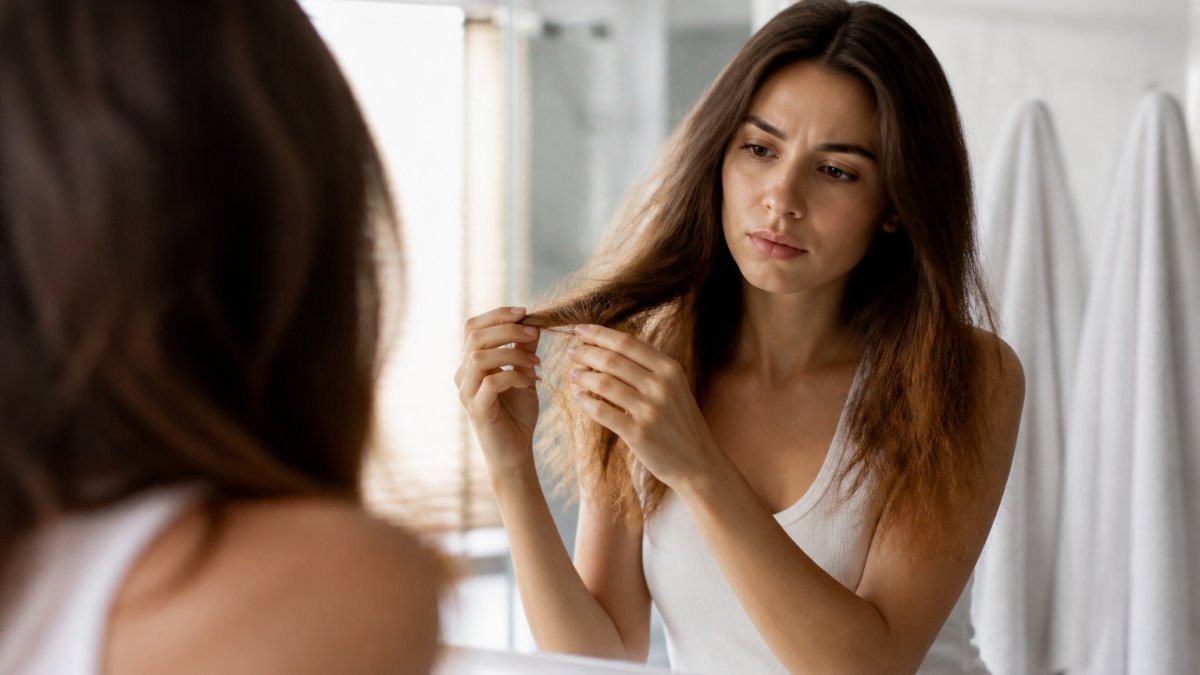
A quick test: pull one wet strand. If it snaps fast, you have dryness or breakage. If it stretches like gum and stays stretched, the bonds are gone.
Step 2: Stop Further Damage and Set Up Your Hair Care Routine for Color-Treated Damaged Hair
Stop the damage before you try to repair it. Otherwise you're filling a bucket with the tap still running.
Most repair routines fail because people keep coloring, heat styling, and rough-drying while expecting a mask to undo it.
Your reset list:
- Pause all bleach, dye, and chemical straightening for at least 8 weeks
- Swap to a sulfate-free shampoo for color-treated hair
- Cut heat styling to once a week, always with heat protection
- Stop brushing wet hair; use a wide-tooth comb
- Sleep on a silk or satin pillowcase to cut friction
A hair care routine for color-treated damaged hair is mostly about subtraction. Take things away first.
Step 3: How to Fix Hair Damaged by Bleach
Bleach does the most damage of any color service. It opens the cuticle and strips pigment, and it breaks the disulfide bonds that give hair its strength.
So how to fix hair damaged by bleach? You rebuild bonds first, then add moisture. Doing it backwards wastes both.
The order that works:
- Bond repair first. Use a bond-building treatment once a week to reconnect broken bonds.
- Moisture second. Follow with a deep conditioning mask to soften and seal.
- Protein only if needed. Too much protein makes hair stiff and snap-prone.
Our pick for this stage is the Amika The Kure Intense Bond Repair Mask. It's built on Bond Cure Technology to target the bonds most likely to break. The listing reports 69% less breakage and 8x more conditioning, and it's clinically proven safe for color-treated hair. At $28.80, it's the workhorse of a bleach recovery plan.

If your blonde has gone brassy, pair it with the Amika Bust Your Brass Cool Blonde Strength Repair Conditioner. The ultra-violet pigments tone yellow while vegan proteins and plant butters repair. It's $34.80, and the listing reports 86% more repair and 55% less breakage when used as a system.
Step 4: How to Fix a Botched Hair Dye Without Making It Worse
The biggest mistake after a bad dye job is trying to fix it the same day. That's how a bad color becomes a chemical burn.
Wait at least two weeks. Your cuticle is still open and your scalp is still irritated. More chemicals now will make everything worse.
What to do instead:
- Give your scalp 48 hours before you even wash it
- Use a gentle, sulfate-free shampoo for the first two weeks
- Deep condition twice a week to calm the cuticle
- Don't bleach over a fresh dye job, ever
- Book a color correction with a professional if the shade is badly off
If the color is too dark, a clarifying wash can lift a little surface pigment. If it's too orange or yellow, a toning conditioner is safer than another dye.
Step 5: Choose the Best Hair Masks for Color-Treated Hair
The best hair masks for color-treated hair do two things at once: they repair the strand and they protect the color. Skip either one and you're choosing between healthy hair and the shade you paid for.
Bond builders target the disulfide bonds that bleach and permanent dye break. They work on the internal structure of the strand. They help most with elasticity, hair that stretches and won't snap back.
Protein treatments fill gaps in the cuticle where keratin has been stripped. They help most with hair that feels limp, porous, or overly stretchy. The trade-off is real: too much protein makes hair stiff, brittle, and prone to snapping.
Amika The Kure Intense Bond Repair Mask →
Moisture masks (plant butters, oils, humectants) soften the cuticle and reduce friction. They help most with roughness, tangling, and dullness. They cannot rebuild a broken bond or replace lost protein.
A practical way to sequence them:
- Week 1: Bond builder. Give it the full week to work.
- Week 2: Moisture mask. Assess whether hair feels softer or still brittle.
- Week 3: Protein mask only if hair still feels stretchy or limp. Skip if it already feels stiff.
- Week 4: Repeat the cycle, adjusting based on how hair responds.
Most practitioners find that alternating bond and moisture, with protein used sparingly, prevents the two most common overcorrection mistakes: protein overload (stiff, snapping hair) and moisture overload (gummy, limp hair that won't hold a style).
What to look for on a label:
- Bond-building ingredients that rebuild broken disulfide bonds
- Color-safe formulas that won't strip or shift pigment
- Plant butters and oils like shea, mango, and borage for moisture
- No sulfates, which fade color fast
For a full routine in one box, the AVEDA Limited-Edition Bonds of Brilliance Botanical Repair Strengthening Essentials Gift Set covers shampoo, conditioner, and leave-in. The leave-in provides heat protection up to 450°F, which matters if you style.

For a lighter daily option, the Living Proof Restore Instant Repair Cream is a leave-in that the listing reports makes hair 15x stronger after one use and prevents up to 93% of new split ends from styling.

| Product | Best For | Key Benefit | Price |
|---|---|---|---|
| Amika The Kure Mask | Bleach and chemical damage | Bond repair, 69% less breakage | $28.80 |
| Amika Bust Your Brass Conditioner | Brassy blonde, silver, gray | Toning plus bond repair | $34.80 |
| Aveda Bonds of Brilliance Set | Full routine, color protection | Shampoo, conditioner, leave-in | $80.40 |
| Living Proof Restore Cream | Fine hair, daily leave-in | 15x stronger, UV protection | $28.56 |
Step 6: Build a Staged Recovery Plan with Realistic Timelines
Real repair takes months, not days. Anyone promising overnight results is selling hope. But the timeline is not the same for every kind of color damage. Bleach, permanent dye, and repeated coloring stress the hair differently, and the recovery plan should reflect that.
Bleach damage is the deepest. Bleach lifts the cuticle and breaks disulfide bonds throughout the cortex. Recovery is slowest, expect 4 to 6 months for meaningful change on heavily lightened hair, and understand that some damage is structural and permanent until it's cut.
Permanent dye damage is usually more surface-level. The cuticle is opened to deposit pigment, but the cortex is less affected than with bleach. Most people see real improvement in 6 to 10 weeks with consistent bond and moisture care.
Repeated coloring, overlapping dyes, root touch-ups that creep down the shaft, going darker then lighter then darker, creates cumulative cuticle damage. It behaves like a mix of the two above. Recovery depends on how many cycles the hair has been through.
Here's a staged plan that works across all three, with markers to tell whether it's working:
- Weeks 1-2, Stop the damage. No bleach, dye, or chemical straightening. Gentle sulfate-free wash, deep condition twice. Marker: hair should stop shedding short broken pieces during washing.
- Weeks 3-6, Rebuild bonds. Add a bond-building treatment once a week. Trim split ends. Marker: wet hair should stretch slightly and bounce back instead of snapping or staying stretched.
- Weeks 7-12, Add daily support. Introduce a leave-in treatment. Color should look fuller as strands thicken and reflect light. Marker: fewer flyaways, less tangling when combing wet.
- Month 4+, Maintain. Bond treatment every 1-2 weeks, deep condition weekly. Marker: new growth at the roots looks noticeably healthier than the older, colored ends.
Most people see real change around week 6. Full recovery from heavy bleach can take 6 months or more. If you're past week 12 and nothing has improved, the damage is likely structural, see Step 7.
Step 7: Know When to Stop Home Treatment and See a Professional
Some damage needs a pair of scissors, not a product. Know when to stop.
Book a professional if you notice:
- Hair that feels gummy or mushy when wet
- Large clumps falling out during washing
- Scalp pain, redness, or sores
- Breakage right at the scalp
- Color that keeps shifting after every wash
A stylist can cut away damage that no mask will fix. Sometimes the fastest route to healthy hair is losing two inches.
If your scalp is irritated or you're losing hair in patches, see a doctor. The American Academy of Dermatology advises that sudden shedding after a chemical service is worth a medical look, not another treatment.
Color damage is frustrating because it never heals on your schedule. But the fix is simpler than most people think: stop the damage, rebuild the bonds, and give it time. At Roots & Co., we stock the professional-grade masks and repair treatments that make each stage easier, from the Amika The Kure Intense Bond Repair Mask to the Aveda Bonds of Brilliance set. Every product in our collection is color-safe and chosen for real repair, not marketing claims. Get started with Roots & Co. and give your color-treated hair the recovery it deserves.
Frequently Asked Questions
How to restore hair color after bleaching?
Restoring color after bleaching requires a two-part approach: repair the hair first, then tone. Use a bond-repair mask like Amika The Kure Intense Bond Repair Mask ($28.80) weekly to strengthen strands. For toning, use a color-depositing conditioner such as Amika Bust Your Brass Cool Blonde Strength Repair Conditioner ($34.80) to neutralize brassiness. Avoid permanent dye for at least four weeks to prevent further damage.
What is the best hair care for colored hair?
The best routine for color-treated hair includes a sulfate-free shampoo, a weekly deep-conditioning mask, and a leave-in treatment with heat protection. Aveda's Botanical Repair Strengthening Leave-In Treatment (part of the Bonds of Brilliance set, $80.40) provides heat protection up to 450°F and builds bonds. Limit hot tools and always use UV protection to preserve color.
Can color-damaged hair be repaired, or does it need to be cut?
Mild to moderate color damage can often be repaired with bond-building treatments and moisture. However, if the hair feels gummy when wet or stretches and snaps, the damage is irreversible and those sections need to be trimmed. A staged recovery plan can restore health to the rest, but split ends will not mend themselves.
How long does it take for color-damaged hair to improve?
With consistent use of bond-repair products like Amika The Kure mask, you may see reduced breakage in 2-4 weeks. Significant improvement in softness and strength typically takes 6-8 weeks. Full recovery depends on the extent of damage; hair grows about half an inch per month, so trimming damaged ends gradually reveals healthier hair.