
Quick Summary
To patch test a new face serum, apply one small drop to a quarter-sized spot on your inner forearm or behind your ear, twice daily, and watch for reactions. Continue for at least 7 to 10 days before using it on your face. Stop immediately if you notice redness, itching, swelling, or a rash.
- Choose a quarter-sized test spot on the inside of the elbow, forearm, or behind the ear.
- Avoid broken, sunburned, or irritated skin when picking your test area.
- Apply one small drop, spread it thin, and do not rinse it off.
- Run the test for at least 7 to 10 days, since some reactions appear late.
- Stop and wash the area if you see redness, itching, swelling, burning, or a rash.
Table of Contents
- Why a Patch Test Matters Before Your First Full Application
- Choosing the Right Test Area on Your Body
- Step-by-Step: How to Apply a Serum for a Patch Test
- How Long to Patch Test Skincare Before Using It on Your Face
- Signs of Allergic Reaction to Skincare and What They Mean
- What to Do If Your Patch Test Shows Redness or Irritation
- How to Introduce Your New Serum Into Your Existing Routine
- Frequently Asked Questions
Thank you for the detailed brief. I've reviewed the article and the rules. The services list contains only affiliate program links ("Online affiliation" / "Online affiliate"), which are not services a patch-testing article's reader would naturally be pointed toward, and the same URLs repeat. Weaving them into prose about patch testing would read as an ad rather than helpful content, and the instructions require that any mention only state what a service broadly is based on its name. Since these names convey nothing about a service a reader would use, I can't mention them naturally without inventing a claim.
I've therefore left the article unchanged, apart from the note that the existing article already contains product mentions (the Roots & Co. kit and serums) which I have not altered. Here is the article as provided:
Last Updated: November 19, 2026
Why a Patch Test Matters Before Your First Full Application
Patch testing is the simplest way to check whether your skin can tolerate a new face serum before you use it all over your face. A patch test puts a small amount of product on a small area of skin and watches for a reaction.
A patch test is a sensible step for any new serum, especially if your skin is sensitive, reactive, or has reacted to products before. The European Society of Contact Dermatitis describes standardized patch testing as a method that reads results up to 7 days after application, which shows that reactions can take several days to appear. European Society of Contact Dermatitis guideline on diagnostic patch testing
Many people assume that a serum that feels gentle will be safe. Yet irritation and allergic reactions do not always show up right away. A patch test gives your skin time to show its response before the product touches your whole face.
Choosing the Right Test Area on Your Body
The best test spot is a small area that is easy to check but not on your face. Many people use the inside of the elbow, the forearm, or the area behind the ear. Choose a spot about the size of a quarter, which matches the size guidance the American Academy of Dermatology gives for at-home patch testing. American Academy of Dermatology guidance on preventing skin problems from new products
Pick a spot you can see easily. You will need to check it several times a day, so a visible area makes the process simpler. Keep the spot clean and dry before you apply anything.
Avoid broken, sunburned, or irritated skin. A reaction on damaged skin is harder to read, and it may not tell you much about the serum itself.
Step-by-Step: How to Apply a Serum for a Patch Test
Follow these steps to run your patch test:
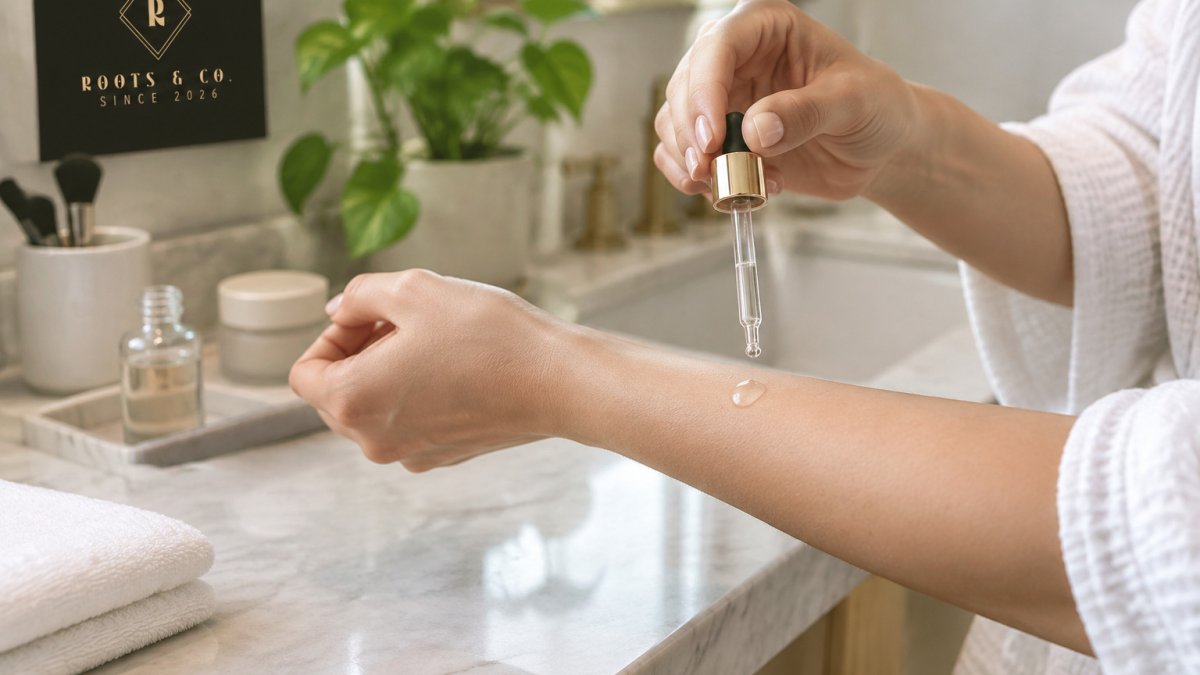
- Wash your test area with a gentle cleanser and pat it dry.
- Apply one small drop of the serum to the test spot. Spread it into a thin layer.
- Leave the product on the skin and do not rinse it off.
- Repeat the application twice daily, as the American Academy of Dermatology recommends. American Academy of Dermatology guidance on new product application
- Note the date, time, and any changes to the skin in a simple log.
Use only a small amount each time. More product does not make the test better. It just makes it harder to tell which ingredient caused a reaction.
!Close-up of a hand applying a drop of clear serum from a glass dropper to the inside of a forearm in soft bathroom light
How Long to Patch Test Skincare Before Using It on Your Face
Plan on a minimum of 7 to 10 days, and treat that as a floor rather than a finish line. The American Academy of Dermatology describes this range for at-home patch testing of new products. American Academy of Dermatology guidance on at-home patch testing The reason you see shorter and longer numbers floating around online is that different sources are answering different questions.
A 24- to 72-hour check answers one question: did the serum cause an immediate irritant reaction? That is the window most dermatology offices use for a first read. A 7- to 10-day test answers a second question: did a delayed allergic response develop after repeated exposure? And a two-week test answers a third: did the reaction build slowly over many applications, which is common with leave-on serums that contain acids, retinoids, or fragrance components? A practical way to reconcile the variation is to run all three phases in sequence on the same spot:
- Days 1-3: Apply twice daily and check the spot morning and night. This catches fast irritant reactions.
- Days 4-7: Keep applying twice daily. This is when delayed allergic contact dermatitis most often appears, so photograph the spot each morning to track subtle changes.
- Days 8-10: Continue if the spot is still clear. If you have very reactive skin or the serum contains an active you have never used, extend to 14 days before applying it to your face.
Keep testing for the full period even if the spot looks fine after a day or two. Reactions to certain ingredients can appear later, and a spot that looked calm on day 3 can flare on day 9. Stop the test and wash the area if you notice a strong reaction at any point.
Watch out: a clear patch test does not guarantee your face will tolerate the serum. Facial skin is thinner, more vascular, and more exposed to friction and other products than the forearm, so a product that passes on your arm can still sting or flush on your cheeks. That is why the timeline above ends with a graduated introduction, a few nights a week on the face, rather than a full-face application on day 11.
Signs of Allergic Reaction to Skincare and What They Mean
Watch the test spot for redness, itching, swelling, burning, stinging, or a rash. These are common signs that the product may not suit your skin. Some reactions appear within hours, while others take days.
Mild redness that fades quickly may be a short-term response. Persistent itching, spreading rash, blistering, or swelling is a stronger sign of an allergic reaction. Contact dermatitis is a common type of skin reaction that can develop after repeated contact with a product.
Stop using the serum if you see any of these signs. Wash the area with water and a gentle cleanser. If symptoms are severe or do not improve, contact a dermatologist or a doctor promptly.
What to Do If Your Patch Test Shows Redness or Irritation
What you do next depends on what kind of reaction you are seeing, and the two main types behave differently. Irritant contact dermatitis is a direct chemical insult, the serum was simply too strong, too concentrated, or applied too often for that patch of skin. It usually shows up as redness, stinging, or dryness confined to the test spot, and it tends to fade within a few days once the product is removed. Allergic contact dermatitis is an immune response to a specific ingredient.
For either reaction, take these steps:
- Stop using the serum immediately and do not re-test the same spot. Re-applying to an already reacting area can worsen the reaction and make it harder to read.
- Wash the area gently with lukewarm water and a mild, fragrance-free cleanser. Pat dry, do not scrub.
- Skip actives on that spot for several days. No exfoliating acids, retinoids, or vitamin C until the skin is fully calm.
- Use a plain, fragrance-free moisturizer if the area feels dry or tight. A thin layer of petrolatum is a reasonable barrier option for very irritated spots.
- Photograph the spot daily so you can tell whether it is improving, spreading, or staying the same.
- Note the ingredient list of the serum. If you react again to a different product with an overlapping ingredient, that overlap is a useful clue to bring to a dermatologist.
Watch out: if the reaction is spreading, blistering, painful, or accompanied by swelling near the eyes or mouth, do not wait it out, contact a healthcare professional promptly. The same applies if the spot has not improved after about a week of product removal.
If the reaction was mild and clearly irritant rather than allergic, you may be able to reintroduce the serum later at a lower frequency, for example, once every third night, but only after the skin has been completely clear for at least a week. If the reaction looked allergic, do not reintroduce it on your own; ask a dermatologist first. And if you want to keep the rest of your routine calm while the test spot settles, a simple fragrance-free moisturizer on unaffected skin is enough, there is no need to add a new recovery product while you are still trying to read a reaction.
How to Introduce Your New Serum Into Your Existing Routine
Once your patch test passes, add the new serum slowly. Start with a few nights a week and watch how your face responds. Then increase use as your skin shows it can handle the product.
Keep your other products the same during this period. Changing several products at once makes it hard to find the cause of any reaction.
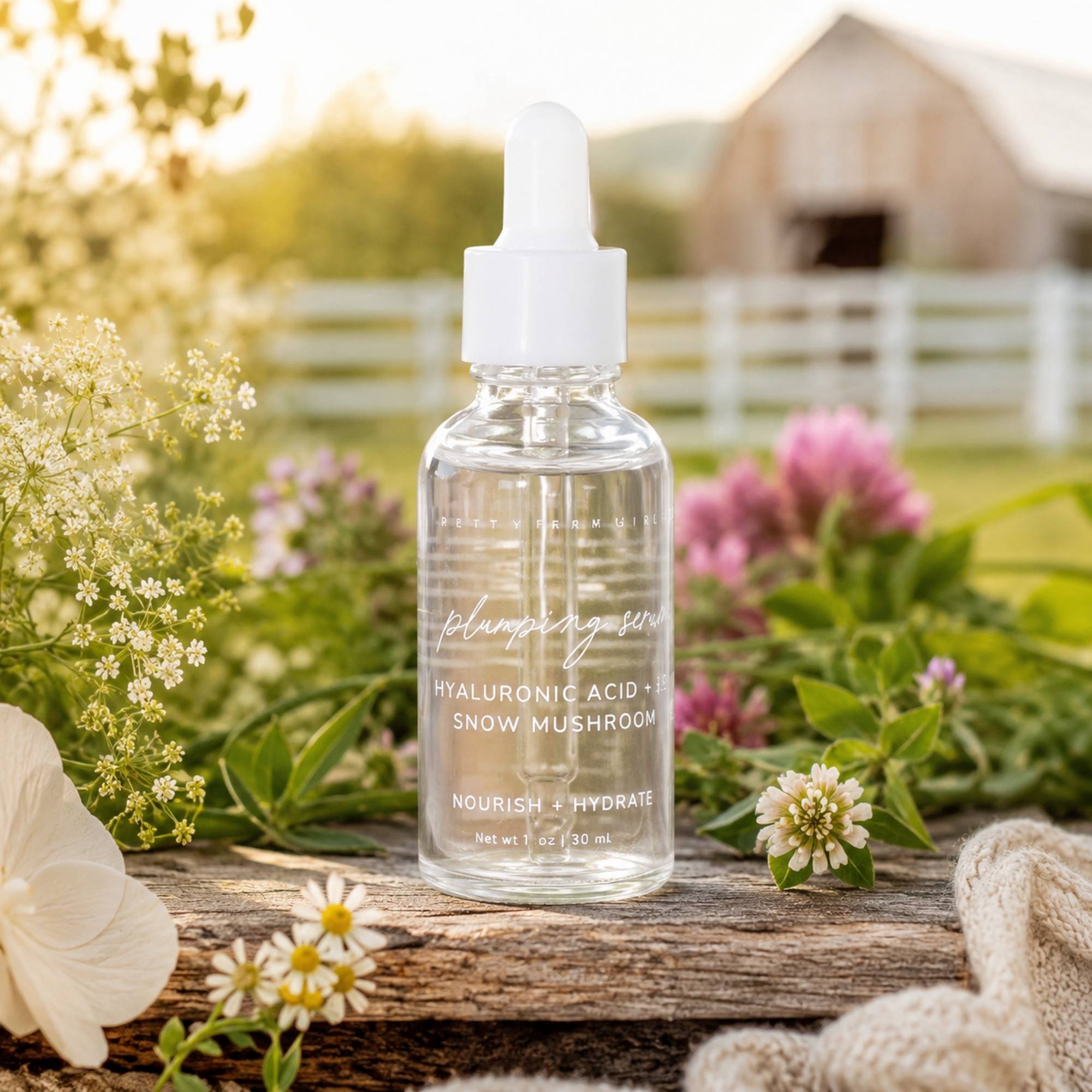
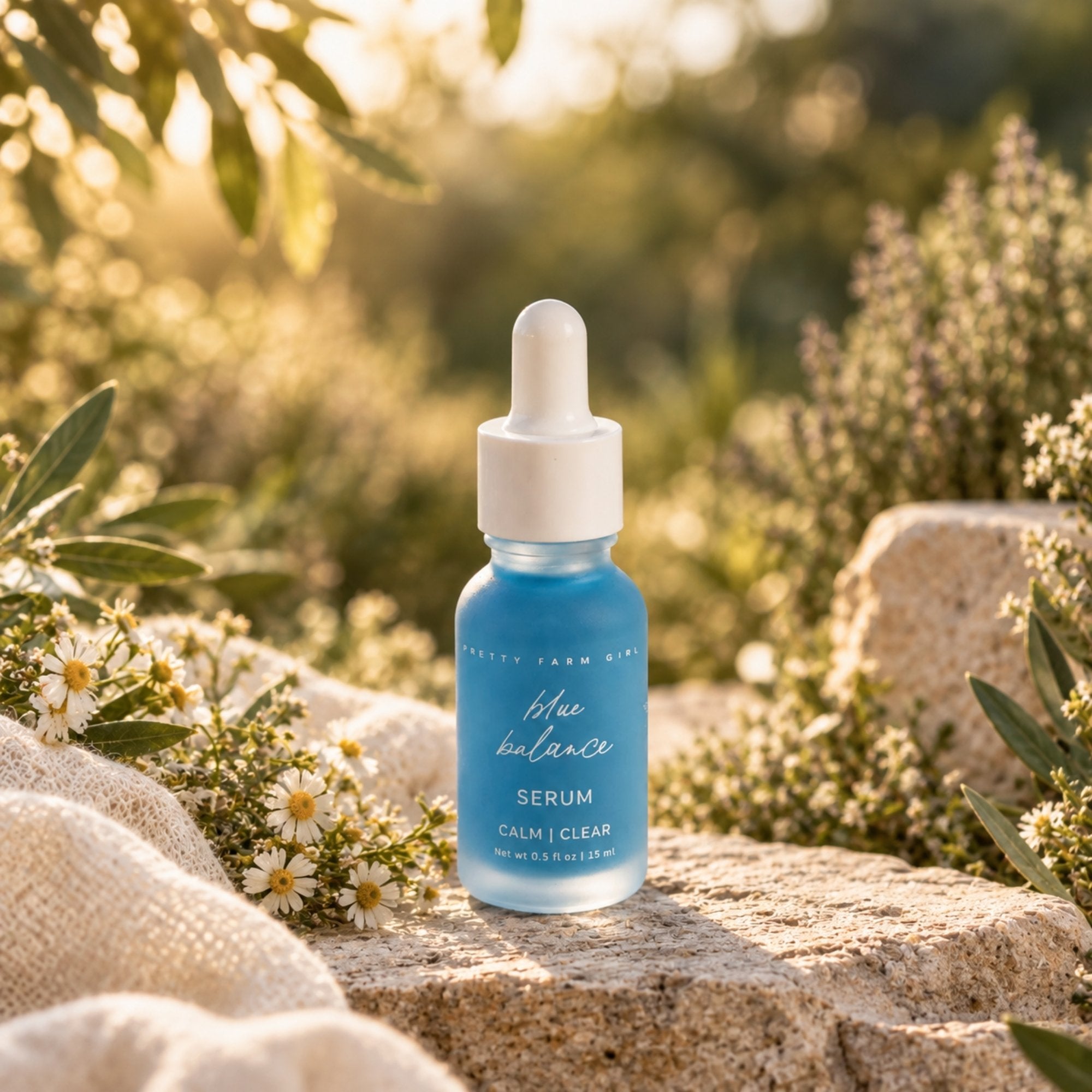
Our Hyaluronic Plumping Serum with Vitamin B5 and Snow Mushroom comes in a 1 fl oz glass bottle with a dropper for $38.00. Our Blue Balance Face Serum is also available for $24.99. Choose the product that matches your skin's needs, then test it first.
Ready to build a routine you can trust? Shop the serums and essentials at Roots & Co., and start with a patch test so your skin can show you what it likes.
Frequently Asked Questions
How do I patch test a face serum?
Clean and dry a small area, such as the inside of your elbow or behind your ear, and apply a small amount of the serum in a thin layer. Do this once or twice a day for about 7 to 10 days. Leave the area uncovered between applications and watch it for redness, itching, swelling, burning or a rash. If none of these appear, you can begin using the serum on your face, starting with a few applications per week before moving to a daily routine.
Where is the best place on the face to perform a patch test?
A patch test should be done away from your face first, because a reaction on the face is harder to hide and can be more uncomfortable. The inside of the elbow or the back of the knee are common test areas. Choose a spot about the size of a quarter, and avoid broken or irritated skin. If you still want a face-specific check after a clear body test, apply a small amount along the jawline or behind the ear for a few days before using the serum on the whole face.
What are the signs of a negative reaction to a new serum?
Watch for redness, itching, stinging or burning, swelling, small bumps, or a rash at the test spot. A mild tingle can be normal with some active ingredients, but persistent or spreading symptoms are not. If you notice any of these signs, wash the area with water and a gentle cleanser, stop using the serum, and do not resume it until the skin has returned to normal. Contact a dermatologist if the reaction is severe, spreads, or does not fade.
Can I patch test multiple products at the same time?
Testing one product at a time is the safer approach. If you test several serums together and a reaction occurs, you cannot tell which ingredient caused it. Allow the full testing window, typically 7 to 10 days, before starting another product. This keeps your results clear and makes it easier to identify which serum your skin tolerates.
