
Last Updated: November 20, 2026
Quick Summary
The best deep conditioners for dry hair on this list are the Amika Hydro Rush Intense Moisture Hair Mask, the Amika Soulfood Nourishing Mask, the Amika The Kure Intense Bond Repair Mask, and the Olaplex Weightless Nourishing Mask. Each targets a different hair need, from dehydrated and low-porosity strands to fine hair that needs volume.
- Deep conditioners are more concentrated and are typically left on for 20 to 30 minutes.
- The Amika Soulfood Nourishing Mask is the least expensive pick at $15.00.
- Leave the Olaplex Weightless Nourishing Mask on for 3 to 5 minutes, or up to 20 minutes for very dry hair.
- Very dry or coarse hair may need twice-weekly treatments until it feels supple.
Table of Contents
- How We Chose These Five Deep Conditioners
- Quick Comparison: Five Deep Conditioners at a Glance
- 1. Amika Hydro Rush Intense Moisture Hair Mask: Best for Dehydrated, Low-Porosity Hair
- 2. Amika Soulfood Nourishing Mask: Best Budget Pick for Everyday Hydration
- 3. Amika The Kure Intense Bond Repair Mask: Best for Dry, Damaged Strands
- 4. Olaplex Weightless Nourishing Mask: Best for Fine, Dry Hair That Needs Volume
- How Often to Deep Condition Dry Hair
- How to Use a Deep Conditioner for Maximum Moisture
- Frequently Asked Questions
How We Chose These Five Deep Conditioners
Deep conditioners work differently from everyday conditioners. They are more concentrated and are meant to sit on the hair for longer. A review on hair-care physicochemistry notes that deep conditioners are generally left on for 20 to 30 minutes and are recommended for extremely dry hair or before chemical treatment On Hair Care Physicochemistry review, 2023.
We built this list around that reality. Where we describe a benefit, it comes from the product's own description.
Editorial roundups from the beauty press were also part of our research. Outlets such as Byrdie and Allure split their picks by hair concern, which matches how we sorted these masks Byrdie deep conditioner roundup. The New York Times Wirecutter also evaluated dozens of conditioners before naming its top pick for dry, damaged hair Wirecutter conditioner evaluation.
Quick Comparison: Five Deep Conditioners at a Glance
This table lists the five masks on this page, the hair type each one targets and the listed price.
| Mask | Best For | Listed Price |
|---|---|---|
| Amika Hydro Rush Intense Moisture Hair Mask | Dehydrated, low-porosity hair | $24.00 |
| Amika Soulfood Nourishing Mask | Everyday hydration | $15.00 |
| Amika The Kure Intense Bond Repair Mask | Dry, damaged strands | $24.00 |
| Olaplex Weightless Nourishing Mask | Fine, dry hair that needs volume | $44.00 |
Listed Price
Prices are the listed starting prices in USD on the product pages and may change.
1. Amika Hydro Rush Intense Moisture Hair Mask: Best for Dehydrated, Low-Porosity Hair
If your hair feels thirsty even after washing, this whipped mask is the one to start with. The product page describes it for dry, brittle strands, especially those with low porosity or coarse textures, and notes its silicone-free formula.
The product page lists hyaluronic acid, squalane and coconut water among its ingredients, plus a vanilla and citrus scent. The directions are simple: apply from mid-lengths to ends, leave on for 5 to 10 minutes and rinse. Use it weekly for the best results.
Best for: dehydrated hair that resists moisture and tangles easily. Skip if: you want a richer, butter-style mask for very coarse, heavily damaged hair.
Listed price: $24.00.
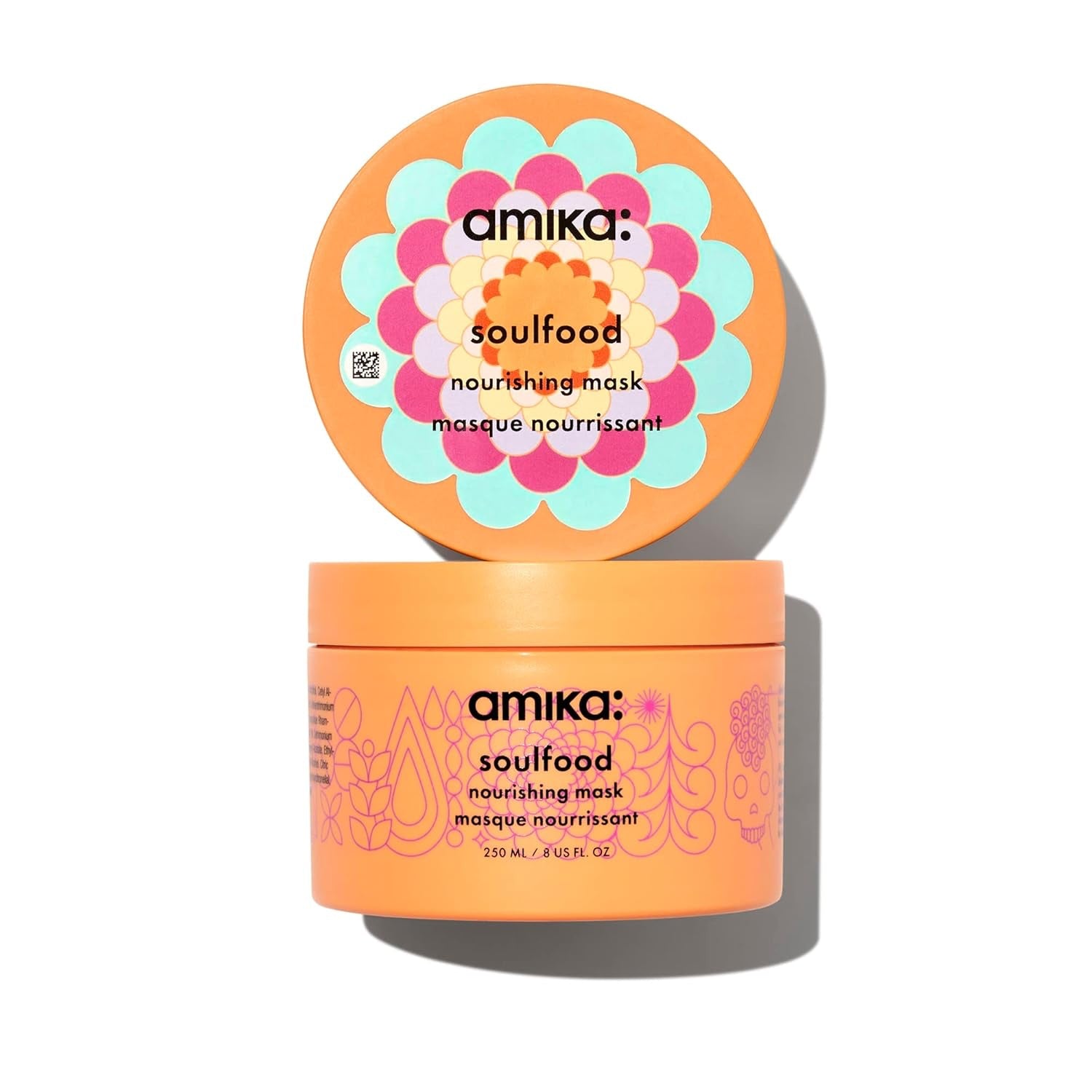
2. Amika Soulfood Nourishing Mask: Best Budget Pick for Everyday Hydration
At $15.00, this is the least expensive mask on the list. Its creamy but light texture is designed to condition dry, dull or damaged hair without a heavy feel. The product page says it is safe for color-treated hair.
Jojoba seed oil and sea buckthorn are the highlighted ingredients. The directions allow flexible use: as a weekly treatment, or as an everyday conditioner for high-porosity hair. Leave it on for 5 to 7 minutes before rinsing.
Best for: a dependable, lower-cost mask you can use often. Skip if: your hair needs intensive bond repair rather than hydration.
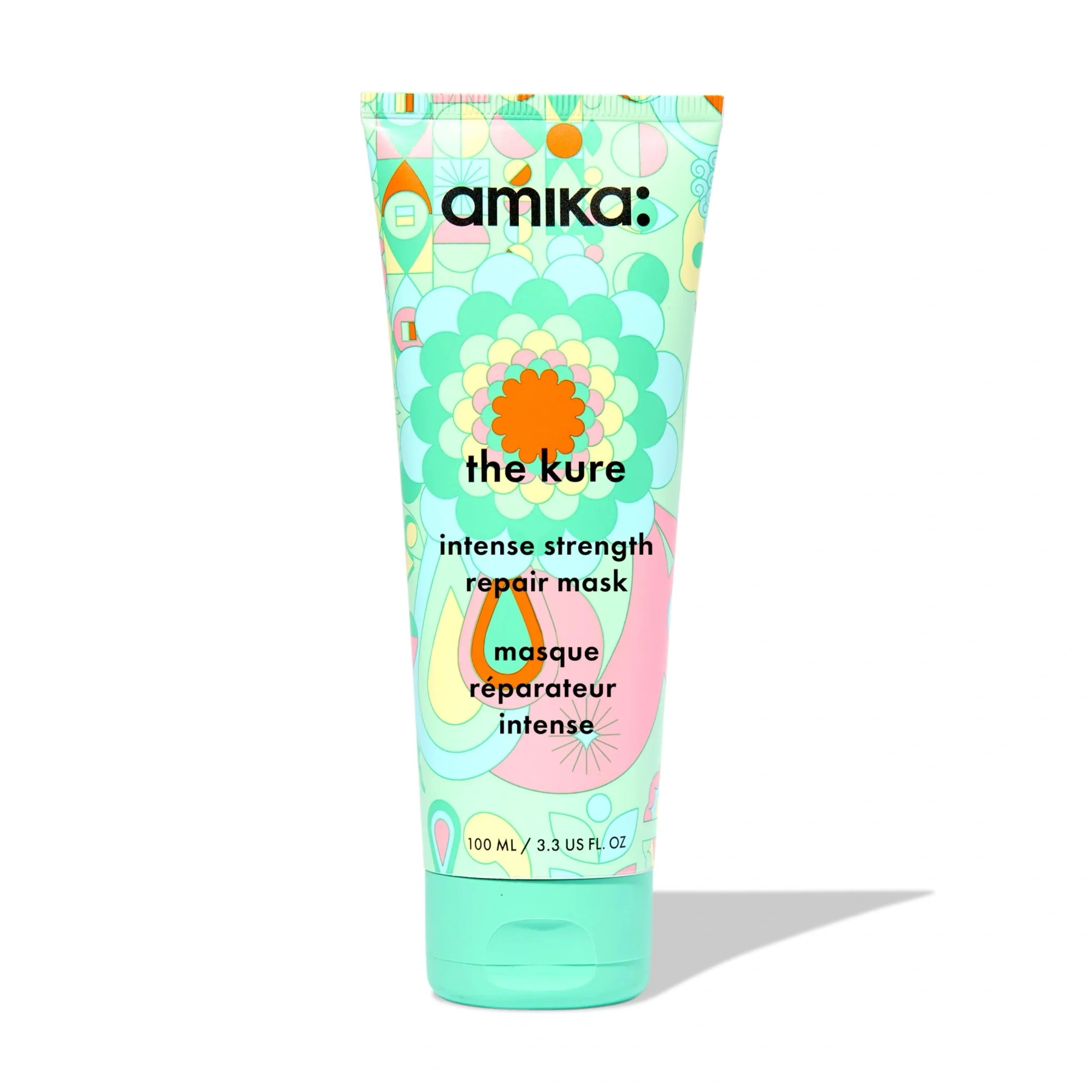
3. Amika The Kure Intense Bond Repair Mask: Best for Dry, Damaged Strands
The product page describes it as a bond-repair treatment with a bond-fortifying complex, along with shea, mango and borage oils.
Use it as a weekly intensive treatment in place of the conditioner in the Kure line. Leave it on for about 10 minutes, then rinse. Its listed price is $24.00.
Best for: dry, damaged strands that break easily. Skip if: your hair is fine and tends to feel weighed down by rich masks.
4. Olaplex Weightless Nourishing Mask: Best for Fine, Dry Hair That Needs Volume
This Olaplex mask is built for fine to medium hair that needs moisture without extra weight. The product page describes a bond-building formula with lightweight hydration.
Apply it to clean, damp hair from mid-lengths to ends. Leave it on for 3 to 5 minutes, or up to 20 minutes for very dry hair, then rinse. The product page suggests using it one to two times a week.
Best for: fine, dry hair that needs body and softness. Skip if: your budget is tight, since this is the most expensive mask here at $44.00.
How Often to Deep Condition Dry Hair
Frequency is where most dry-hair routines go wrong, in both directions. Too little and hair stays rough and brittle; too much and it turns limp, coated or stiff. A practical starting schedule:
- Moderately dry hair: once a week. This matches the directions on most of the masks above and is a sensible baseline.
- Very dry or coarse hair: twice a week until hair feels supple, then step back to once a week for maintenance.
- Fine or low-porosity hair: every 7 to 10 days. Low-porosity hair absorbs slowly, so more frequent masking tends to sit on top of the strand rather than sink in.
- Chemically treated or heat-damaged hair: once a week with a repair-focused mask, alternating with a moisturizing mask if hair also feels dry.
- High-porosity hair: up to twice a week, since porous strands lose moisture faster and can handle richer, more frequent conditioning.
A common pattern is to treat frequency as a dial rather than a fixed rule. Start at the low end, add a session if hair still feels rough after drying, and pull back if it starts to feel heavy.
Moisture vs. protein: which does your hair need?
Deep conditioners generally fall into two camps, and dry hair can need either or both:
- Moisture-focused masks rely on humectants and oils, hyaluronic acid, glycerin, squalane, coconut and jojoba oils, to soften and add slip.
- Protein or bond-repair masks use proteins, amino acids or bond-building technology to temporarily reinforce weakened strands.
Signs hair needs more moisture: it feels straw-like, tangles instantly when wet, and snaps without stretching. Signs it needs protein: hair stretches too far before breaking, feels mushy when wet, or has lost elasticity after bleaching. Signs of over-conditioning from too much protein: stiffness, crunch, and increased snapping, pull back on repair masks and switch to a moisturizing one for a few weeks.
Watch out: if hair feels coated or waxy no matter how thoroughly you rinse, the issue is usually buildup from repeated rich masks rather than dryness, and clarifying once before resuming a lighter schedule often fixes it.
Fitting treatments into a wash routine
A simple weekly rhythm works for most people: shampoo, apply the mask to clean damp hair, leave it on for the product's listed time, rinse, then follow with a lightweight leave-in if ends still feel dry. On the days between treatments, a regular conditioner is enough. If you wash daily, swap one wash for a mask session rather than adding a mask on top of a full conditioning routine.
How to Use a Deep Conditioner for Maximum Moisture
Application technique matters as much as the product. A mask applied to soaking-wet hair or left on for two minutes rarely delivers the result the label promises. A repeatable routine:

- Start with clean, damp hair. Shampoo first, then squeeze out excess water until hair is damp, not dripping. Waterlogged hair dilutes the mask and makes it slide off the strand.
- Section the hair. Divide into four to six sections, especially if hair is thick or long. Working section by section is the difference between even coverage and a mask that only reaches the top layer.
- Apply from mid-lengths to ends. These are the oldest, driest parts of the strand. Apply to the scalp only if the product directions say so; most deep conditioners are not formulated for scalp use.
- Comb through with a wide-tooth comb. This distributes product evenly and detangles at the same time, which also reduces breakage during rinsing.
- Respect the clock. Leave-in times across the five masks above range from 3 to 5 minutes (Olaplex Weightless) to 5 to 10 minutes (Hydro Rush) to about 10 minutes (The Kure).
- Add gentle heat if the label allows. A shower cap traps body heat; some practitioners also use a warm towel.
- Rinse thoroughly with lukewarm water. Rinse until the water runs clear.
Matching the mask to your hair profile
Most roundups sort by broad hair type. A more precise approach uses porosity and strand thickness:
- Low porosity (cuticle lies flat, water beads up): use lightweight, silicone-free masks and gentle heat to help absorption. The Hydro Rush mask fits here.
- High porosity (hair absorbs water fast and dries fast): richer masks with oils and butters, used more often, help slow moisture loss.
- Fine strands: weightless formulas and shorter leave-in times prevent flatness.
- Coarse or dense hair: thicker, butter-style masks and sectioning are essential for even coverage.
Ingredient considerations for sensitive scalps
If your scalp reacts easily, scan labels for fragrance and common allergens before buying. Several masks above are scented, and fragrance is a frequent trigger for irritation. The Hydro Rush mask is silicone-free. Patch-test a new mask on a small section if you have a history of scalp sensitivity.
For more guidance, see our how to fix color damaged hair guide if your hair has been colored or bleached. If you are choosing a mask for fine hair, you can compare the Olaplex Rich Hydration Mask with the weightless option above.
Hair care is personal, so start with the mask that matches your hair concern and your budget. Browse the full selection at Roots & Co. and find the mask that fits your routine.
Frequently Asked Questions
What is the best deep conditioner for dry hair?
For dry, dehydrated hair, the Amika Hydro Rush Intense Moisture Hair Mask ($24.00) is a strong starting point. The product page lists it as silicone-free and designed to hydrate hair for up to 5 days. If your hair is also fine and needs lightness, the Olaplex Weightless Nourishing Mask ($44.00) is designed to hydrate without weighing hair down. Match the formula to your hair's main need rather than choosing by price alone.
How often should you use a deep conditioner on dry hair?
Most of the masks in this list are listed for use as a weekly treatment, and the Amika Soulfood Nourishing Mask can also serve as an everyday conditioner for high-porosity hair. Start with once a week and watch how your hair feels after a few washes. If it looks greasy or limp, reduce frequency. If it still feels dry or tangles easily, you can increase use, especially for very dry hair.
Can a deep conditioner repair dry, damaged hair?
A deep conditioner mainly adds moisture and softness, while repair-focused masks aim to strengthen hair bonds. The Amika The Kure Intense Bond Repair Mask ($24.00) is formulated with Bond Cure Technology and is listed as color-safe.
How long should you leave deep conditioner in your hair?
Product directions vary. The Amika Hydro Rush mask is listed for 5 to 10 minutes, the Amika Soulfood mask for 5 to 7 minutes, and the Amika The Kure mask for 10 minutes. The Olaplex Weightless mask is listed for 3 to 5 minutes, or up to 20 minutes for very dry hair. Follow the directions on the specific product you buy, then rinse thoroughly.
